

Cloudy pond water results from poor circulation, not chemical problems. Scott fountains solve this by continuously moving water, breaking thermal stratification, and increasing oxygen levels. This accelerates sediment settlement and prevents algae blooms. Most property owners see noticeably clearer water within 2-4 weeks of installation with minimal maintenance required.
Key Takeaways
- Poor water circulation causes algae blooms and oxygen dead zones—fountains fix the root problem, not the symptom
- Results visible in 2-4 weeks as increased oxygenation supports bacteria that break down organic matter and sediment
- Choose fountain size based on pond size
- Position fountains toward deepest or stagnant areas; most units last 5-10 years with basic maintenance
- Fish behavior improves immediately (better oxygen = fish spread throughout pond instead of clustering), signaling the system works
Your pond stares back at you from the window, and something feels off. The water looks cloudy, maybe a little green. You're not alone in noticing this. Many property owners struggle with water clarity and are often surprised to learn that the solution lies right at the surface.
The cloudiness you're seeing points to a real problem: poor water circulation. When water sits still, algae blooms, sediment settles unevenly, and oxygen levels drop in deeper areas. Scott fountains address this directly by continuously moving water, which breaks up stagnation and improves clarity over time. It's less about adding chemicals and more about changing how your water moves.
The good news? Most property owners see results within 2-4 weeks. Here's what's actually happening.
How Water Movement Transforms Clarity
Still water invites trouble. Nutrients accumulate in certain spots, algae have nowhere to go, and dead zones form where fish can't survive. When Scott fountains operate, they create circulation patterns that distribute oxygen throughout the pond. This isn't just happening at the surface either. The fountain draws water from deeper levels and brings it to the surface, mixing layers that would normally remain separate.
Breaking Thermal Stratification: The Key to Clarity
This mixing does something important: it prevents thermal stratification. In summer, your pond develops layers: the top stays warm, while the bottom stays cold. Fish and beneficial bacteria can't move freely between these zones. Aeration breaks this cycle. The result is more balanced oxygen levels, fewer algae as a food source, and clearer water.
Think about what happens in a stagnant pond:
- The surface warms quickly in sunlight
- Below that warm layer sits cold, heavy water that rarely mixes with what's above
- The cold bottom becomes a dead zone where oxygen depletes and sediment rots
- Scott fountains eliminate this problem by forcing water circulation that reaches every depth
Why Your Eyes Notice the Difference Within Days
Clarity depends on suspended particles. When water moves, particles either settle to the bottom, where they belong, or are broken down by bacteria that thrive in oxygenated water. Scott fountains create enough movement to accelerate this process. You'll see clearer water within weeks, sometimes days, depending on how cloudy your pond was to start.
- Algae Control Through Movement: The green tint many people see comes from algae spores that float in still water. Moving water doesn't eliminate algae completely, but it removes the conditions that allow it to grow. Algae still grows on rocks and plants where it belongs, which is normal and healthy, but it won't cloud your water.
- The Initial Turbidity Phase: When you first install a Scott fountain, you might notice the water gets slightly cloudier before it clears. This happens because the fountain stirs up sediment and debris that have settled to the bottom. This phase usually lasts a few days to a week. Once that sediment settles back down or gets broken down by bacteria, your water clarity improves noticeably.
Choosing the Right Fountain for Your Water

Scott fountains come in various sizes because ponds aren't one-size-fits-all. A small residential pond needs different circulation than a lake used by a golf course or municipality. The key is matching fountain power to your water volume.
Calculate Your Fountain Size with This Formula
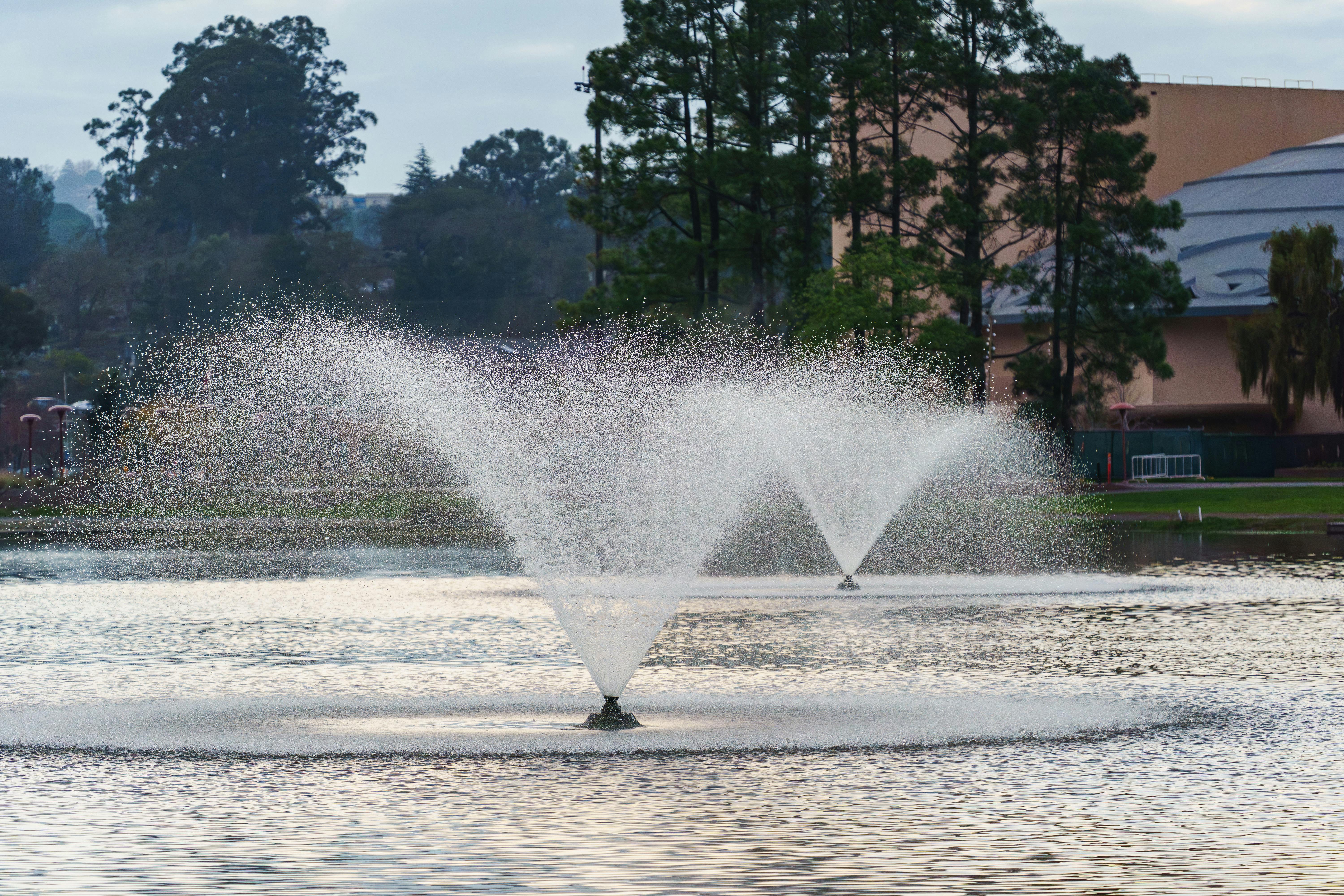
For smaller ponds under a half acre, a single fountain often handles the job. Larger properties might use multiple units or a more powerful model. The crashing of water down to the pond’s surface serves as a water agitator, preventing stagnation and mosquitoes. In addition, with the water leaves the surface and then comes back into the pond oxygen binds to the water droplets, increasing aeration. This keeps water moving fast enough to prevent problems without wasting energy.
Quick Size Reference:
- Quarter-acre pond: Single residential Scott fountain
- Half-acre pond or irregular shapes: Larger model or secondary unit recommended
- Golf courses or municipal lakes: Multiple fountains positioned across different zones.
Not sure which size is right for you? Ready to get expert sizing help? Contact our specialists today to find your perfect fountain.
The Oxygen-Clarity Connection: Why This Matters
Water clarity and oxygen go hand in hand. Cloudy water usually means oxygen is dropping, which stresses fish and kills the bacteria that keep your pond healthy. When Scott fountains run, they break the water surface, pulling oxygen from the air. This gas exchange is fundamental to clarity. More oxygen means faster breakdown of organic matter, which means less murk in your water. Scott pond fountains dramatically boost water quality by improving circulation and oxygenation.
How Bacteria Keep Your Water Clear
The relationship between oxygen and clarity works in multiple ways. Bacteria that consume dead plant material and sediment need oxygen to survive. Without sufficient oxygen, these bacteria can't do their job. Decomposing matter stays suspended or piles up on the bottom, clouding your water. When Scott fountains run continuously, they maintain oxygen levels that support the bacterial populations your pond needs.
Your Fish Know When It's Working
Fish also depend on adequate oxygen levels. In ponds with poor circulation, fish often cluster near the surface or at any water inlet, seeking oxygen. This behavior signals that your pond needs aeration. Once you install a Scott fountain, you'll notice fish spread throughout the pond rather than crowding one area. It's a visible sign your system is working.
Installation & Positioning Tips for Maximum Results


Location matters. Install your fountain where it moves the most water with the least energy waste. Generally, this means positioning it toward the deepest area or the spot where water tends to stagnate. Many people place fountains in the center or slightly off-center to maximize circulation.
Smart Positioning Strategy:
- If you have a cove or shallow corner where water seems to sit, that's where you need circulation most
- For rectangular ponds, center placement usually works well
- For irregular shapes, monitor water movement for a few days after installation to see if repositioning would help
Seasonal Maintenance: Keep Your Fountain Running Strong
Scott fountains don't require constant attention, but some basic care keeps them running well.
Spring & Summer Routine
- Monthly checks: Look for debris at the pump intake
- Clean intake screens: Remove leaves, twigs, and sediment that can clog the system
- Listen for changes: Most Scott fountains operate quietly, so any change in sound suggests something needs attention
- Monitor water flow: Reduced flow usually means the intake needs cleaning or a nozzle is clogged
Winter Considerations
In climates where temperatures drop below freezing for extended periods, removing your fountain is the safest approach for most fountains. But Scott fountains do not have to be removed during icy winters. This is a feature of Scott fountains not seen in most others.
Pro tip: Leaving a fountain running through winter can actually prevent fish kills by keeping a hole open in the ice if your area allows for it.
Most Scott fountains last 5 to 10 years with basic maintenance, though the pump may need to be replaced sooner depending on usage and water conditions. Proper winterization and regular cleaning significantly extend the lifespan.
What You Can Expect: Results Timeline

Within 2-4 weeks: Most property owners notice visible improvement in water clarity, though heavily clouded ponds may take longer as the fountain works through accumulated sediment and algae.
The transformation includes:
- Clearer, more attractive water
- Healthier fish populations with better distribution throughout the pond
- Fewer algae blooms and green water issues
- Less ongoing maintenance and algae treatment needs
The Bottom Line: Transform Your Pond Today
Better water clarity isn't magic. It comes from understanding why your pond clouds up and addressing the root cause. Poor circulation creates conditions where algae thrives and sediment clouds your view. Scott fountains fix this by keeping water moving, oxygen flowing, and stratification from taking hold.
If you've been looking at your pond and thinking something needs to change, water movement is the practical first step. Within a few weeks, you'll see the difference. Your water will clear, your pond will support healthier fish populations, and you'll spend less time dealing with algae problems. That's what continuous aeration delivers.
Ready to restore your pond’s health? Explore high-quality pond systems and get expert guidance to ensure clean, oxygen-rich water year-round.
Frequently Asked Questions
How long does it take to see clearer water after installing a Scott fountain?
Most property owners notice improvement within 2 to 4 weeks, though results depend on how cloudy your water was initially. Heavily clouded ponds take longer as the fountain works through accumulated sediment and algae.
Do Scott fountains work in all seasons?
Yes, they operate year-round, including through icy winters. If you leave one running in freezing climates, it can actually prevent fish kills by keeping a hole open in the ice.
Can a Scott fountain eliminate algae completely?
No, but it controls algae growth by removing the conditions it thrives in. You'll still see some algae on rocks and plants, which is normal and healthy, but it won't cloud your water.
How long do Scott fountains typically last?
Most Scott fountains last 5 to 10 years with basic maintenance, though the pump may need replacement sooner depending on usage and water conditions. Proper winterization and regular cleaning extend the lifespan.
Should I buy an aerating fountain or a display fountain?
This is a very good question. Aerating fountains do not have nozzles and thus aerate a great deal more efficiently than display fountains with nozzles. More water is circulated and aerated. The drawback is that there is only one pattern, the “V” display.
Featured Image Source: https://images.pexels.com/photos/33104013/pexels-photo-33104013.jpeg